Ever felt like you’re wrestling with complex equations, only to realize your everyday calculator just isn’t cutting it? Or perhaps you’re staring down a crucial exam where those fancy graphing models are strictly off-limits? If so, you’re not alone. Welcome to the world of the non-graphing scientific calculator – a truly indispensable tool that, despite its lack of flashy visuals, packs an incredible punch for students, engineers, and scientists alike. At RCITC.com, we believe that understanding and mastering this essential device is fundamental to unlocking your full potential in mathematics and science.
What Exactly is a Non-Graphing Scientific Calculator?
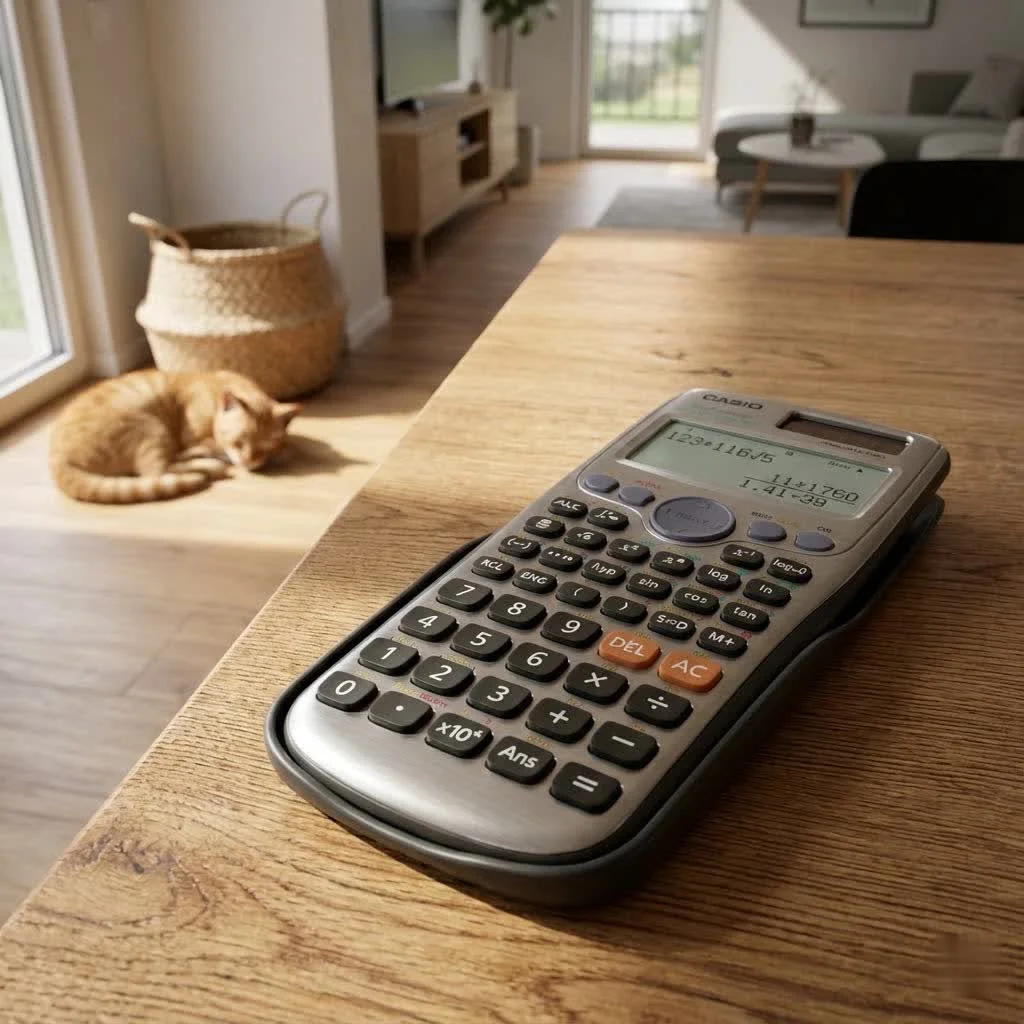
At its heart, a non-graphing scientific calculator is an electronic marvel designed to perform a vast array of mathematical functions beyond simple arithmetic. Think of it as your dedicated computational partner for everything from basic algebra to advanced calculus, all without the visual plotting capabilities of its graphing counterparts. These calculators are purpose-built for precision and efficiency in numerical calculations, focusing on giving you accurate results quickly. While a standard calculator might handle addition and multiplication, a scientific calculator steps up the game with dedicated keys for trigonometry, logarithms, and even complex statistical analysis, making it a true workhorse in academic and professional settings. For expert scientific reviews on this site.
Why Choose a Non-Graphing Scientific Calculator?
You might wonder, with all the advanced technology out there, why opt for a calculator that doesn’t draw graphs? The answer lies in its unique blend of power, practicality, and reliability.
- Cost-Effectiveness: Let’s face it, advanced technology often comes with a hefty price tag. Non-graphing scientific calculators are significantly more affordable than graphing models, making powerful computational tools accessible to everyone. You get immense functionality without breaking the bank.
- Exam Compliance: This is a big one for students! Many standardized tests and university exams specifically disallow graphing calculators due to their advanced features and potential for storing information. A non-graphing scientific calculator, however, is almost always permitted, ensuring you have the computational support you need when it matters most.
- Focus on Core Concepts: Without the visual distractions of graphing, these calculators encourage a deeper understanding of mathematical principles. You’re forced to conceptualize the problem and the operations involved, rather than relying solely on a visual representation. This hands-on approach builds stronger foundational skills.
- Portability and Battery Life: Generally more compact and lighter than graphing calculators, they slip easily into a backpack or even a pocket. Their simpler displays and lower power consumption also mean significantly longer battery life, a huge plus during long study sessions or multiple exams.
Essential Features You’ll Find
|
Our Picks for the Best Scientific Calculator in 2026
As an Amazon Associate I earn from qualifying purchases.
|
||
| Num | Product | Action |
|---|---|---|
| 1 | TI-30XIIS Scientific Calculator, Lavender Limits |

|
| 2 | Casio fx-300ES Plus 2nd Edition – Standard Scientific Calculator - 262 Functions, Natural Textbook Display℠ - Ideal for Middle, High School Math, Statistics & Algebra - Black |
|
| 3 | Casio fx-300ES Plus 2nd Edition – Standard Scientific Calculator - 262 Functions, Natural Textbook Display℠ - Ideal for Middle School, High School Math, Statistics & Algebra - Blue |
|
| 4 | Texas Instruments TI-30XIIS Scientific Calculator, Blue |
|
| 5 | Texas Instruments TI-30XIIS Scientific Calculator, Black with Blue Accents (30XIIS/TBL/1L1/BK) |
|
| 6 | Texas Instruments TI-30XIIS Scientific Calculator, Raspberry Small |
|
| 7 | Texas Instruments TI-30X IIS 2-Line Scientific Calculator, Pink |
|
| 8 | Texas Instruments TI-30XS MultiView Scientific Calculator |
|
| 9 | Casio fx-300ES Plus 2nd Edition – Standard Scientific Calculator - 262 Functions, Natural Textbook Display℠ - Ideal for Middle School, High School Math, Statistics & Algebra - Pink |
|
| 10 | Texas Instruments TI-30XIIS Scientific Calculator, White |
|
While they don’t graph, non-graphing scientific calculators are far from “basic.” They come equipped with a rich set of functions that are crucial across various disciplines.
- Advanced Arithmetic & Algebra: Perform calculations involving fractions, mixed numbers, powers, roots, and percentages with ease. Many also include dedicated equation solvers for quadratic, cubic, and simultaneous linear equations.
- Trigonometry and Hyperbolic Functions: Compute sine, cosine, tangent, and their inverses, as well as hyperbolic functions, in degree, radian, or gradian modes. Essential for geometry, physics, and engineering.
- Logarithms and Exponentials: Calculate natural logarithms (ln), common logarithms (log), and their inverse exponential functions. These are vital for fields like chemistry, finance, and advanced mathematics.
- Statistical Calculations: Analyze data sets with functions for mean, standard deviation, regression analysis, and permutations/combinations. Perfect for statistics courses and data-driven tasks.
- Fractions and Conversions: Easily convert between fractions and decimals, or simplify complex fractions. Many models also offer unit conversions for common measurements.
- Complex Numbers: For those venturing into electrical engineering or advanced physics, many non-graphing scientific calculators can handle complex number calculations, including rectangular and polar forms.
- Constants and Unit Conversions: Some advanced models feature a built-in library of physical constants and a range of unit conversion functions, saving you precious time in scientific problems.
- Memory and Variable Storage: Store multiple values in memory, allowing you to recall them for subsequent calculations without re-entering them. This is a game-changer for multi-step problems.
- “Natural Display” or “MathPrint”: Many modern non-graphing scientific calculators feature a multi-line display that shows equations and results exactly as they appear in textbooks, making input and comprehension much more intuitive.
“In the world of scientific computing, a high-quality non-graphing scientific calculator isn’t just a tool; it’s a foundation,” notes Dr. Elias Vance, a seasoned computational physicist and contributor to RCITC.com. “It distills complex mathematical operations into a focused, reliable instrument, essential for honing analytical skills without digital distractions.”
Non-Graphing vs. Graphing Scientific Calculators: A Clear Distinction
Understanding the core differences between these two calculator types is key to choosing the right tool for your needs. While a graphing calculator can perform all the functions of a scientific calculator and then some, its additional capabilities come with trade-offs.
| Feature | Non-Graphing Scientific Calculator | Graphing Calculator |
|---|---|---|
| Primary Function | Numerical computation and advanced functions | Numerical computation, advanced functions, and visualization of graphs |
| Display | Typically smaller, single or multi-line text display | Larger, pixel-based display for plotting graphs and larger data sets |
| Graphing Ability | None | Yes, plots functions, data, and geometric shapes |
| Cost | Generally affordable (typically $15-$40) | Significantly more expensive (typically $90-$200+) |
| Exam Use | Often allowed in standardized tests and university exams | Frequently restricted or disallowed in exams |
| Memory | Limited storage for variables and previous calculations | Extensive memory for programs, data lists, and multiple functions |
| Programming | Limited to none | Advanced programming capabilities, often supports apps and even Python |
| Complexity | Simpler interface, quicker to master | More complex interface, steeper learning curve |
When should you choose which? If your curriculum heavily relies on visualizing functions, exploring data sets graphically, or programming complex algorithms, a graphing calculator might be beneficial for homework. However, for focused computational tasks, exam readiness, or simply a reliable daily driver that won’t break the bank, the non-graphing scientific calculator is often the superior choice.
Top Non-Graphing Scientific Calculators for Students and Professionals
While personal preference plays a role, certain models consistently stand out for their robust feature sets and user-friendliness.
- Texas Instruments TI-36X Pro: Widely considered a gold standard, this calculator offers a “MathPrint” display, multi-line playback, a comprehensive suite of math and science functions, and even a numerical solver for equations, integrals, and derivatives. It’s often recommended for high school through college-level engineering and science courses.
- Casio FX-115ESPLUS (or newer FX-991EX Classwiz): Casio’s offerings are highly competitive, known for their “Natural Textbook Display” and intuitive menu systems. The FX-115ESPLUS provides advanced features like equation solving, matrix operations, and complex numbers. The FX-991EX Classwiz pushes boundaries further with higher resolution, faster processing, and even QR code generation to view basic graphs on a smartphone (though this feature is typically not allowed in exams).
- Sharp EL-W516TBSL: This model often features a “WriteView” display, similar to the natural display of other brands, and a wide range of functions, including advanced statistics and N-base calculations, making it a strong contender for various technical fields.
These models strike an excellent balance between functionality, ease of use, and affordability, solidifying their reputation as reliable tools for intense academic pursuits.
Mastering Your Non-Graphing Scientific Calculator: Tips for Success
Having the right tool is only half the battle; knowing how to use it effectively is where you truly gain an edge.
- Read the Manual (Yes, Seriously!): While it might seem daunting, your calculator’s manual is a treasure trove of information. It explains every function and how to access it, revealing capabilities you might never discover otherwise.
- Practice Regularly: Just like any skill, calculator proficiency improves with practice. Work through examples, re-solve problems, and experiment with different functions to build muscle memory and confidence.
- Understand Mode Settings: Pay close attention to your calculator’s mode settings, especially for angle units (degrees, radians, gradians). A common mistake is solving a problem in the wrong mode, leading to incorrect answers.
- Utilize Memory Functions: Get comfortable storing and recalling values. This not only speeds up complex calculations but also reduces the chance of input errors.
- Check Exam Rules: Always confirm which calculators are allowed for your specific exams or courses. What’s permitted in one class might be forbidden in another.
Frequently Asked Questions (FAQ)
Q: Can a non-graphing scientific calculator do calculus?
A: Yes, many advanced non-graphing scientific calculators can perform numerical integration and differentiation, solve equations, and handle complex numbers, which are fundamental aspects of calculus. They provide numerical answers rather than symbolic or graphical ones.
Q: Are all non-graphing scientific calculators allowed in exams?
A: While they are generally permitted more often than graphing calculators, it’s crucial to always check the specific rules for your exam or course. Some tests may still have restrictions on certain advanced models or programmable features, even if they don’t graph.
Q: What’s the best non-graphing calculator for engineering students?
A: For engineering students, models like the TI-36X Pro or Casio FX-991EX Classwiz are highly recommended. They offer robust features for complex numbers, vector calculations, matrices, and advanced equation solving, which are essential in engineering disciplines.
Q: How long do batteries last in these calculators?
A: Non-graphing scientific calculators typically have excellent battery life, often lasting for years on a single set of batteries, especially if they are solar-powered with a battery backup. This is a significant advantage over power-hungry graphing calculators.
Q: Is it worth upgrading from a basic calculator?
A: Absolutely. If you’re progressing beyond basic arithmetic into algebra, trigonometry, or any science course, a non-graphing scientific calculator is an essential upgrade. It provides the necessary functions to tackle more complex problems efficiently and accurately.
Unleash Your Potential with the Right Tool
The non-graphing scientific calculator may not have the visual flair of its graphing cousins, but its focused power, affordability, and exam-approved status make it an unparalleled ally in your academic and professional journey. It’s a testament to the idea that true capability often lies in precision and directness. By mastering this versatile device, you’re not just solving equations; you’re building a stronger foundation in critical thinking and quantitative analysis.
Ready to elevate your mathematical prowess? Explore the range of non-graphing scientific calculators, choose one that fits your needs, and start practicing today. Your success in science, engineering, and mathematics often begins with the right tool in your hand, and for countless applications, that tool is the non-graphing scientific calculator.
Get our weekly buyer guide
Practical specs, not advice. Unsubscribe anytime.