In a world filled with advanced technology, from powerful smartphones to sophisticated graphing calculators, it’s easy to overlook the humble non-scientific calculator. Yet, this everyday device, often simply called a “basic” or “normal” calculator, remains an indispensable tool. It’s the workhorse that helps us navigate daily finances, tally up grocery bills, and perform quick sums without a second thought. Understanding the capabilities and limitations of a non-scientific calculator is key to appreciating its enduring value and making the most of this fundamental mathematical aid.
What Exactly is a Non-Scientific Calculator?
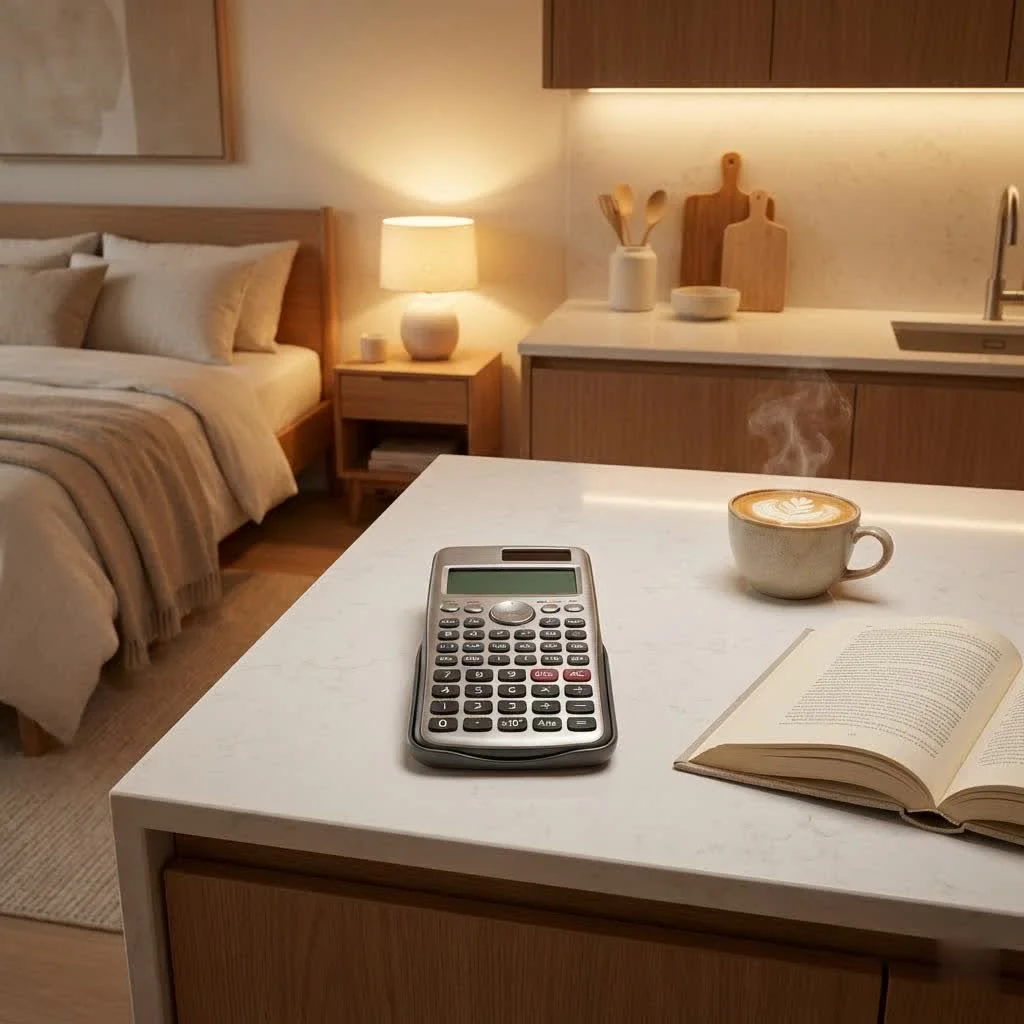
At its core, a non-scientific calculator is a straightforward electronic device designed to perform fundamental arithmetic operations. Think of it as your reliable partner for everyday number-crunching. Unlike its more complex scientific or graphing cousins, a non-scientific calculator focuses on simplicity and ease of use. It typically features a clear, single-line display, often showing 8 to 10 digits, and a clean layout of keys, making it incredibly user-friendly for anyone from students to busy professionals.
These calculators are often referred to as “four-function” or “five-function” calculators because their primary purpose revolves around addition, subtraction, multiplication, and division. Their uncluttered interface and direct functionality make them ideal for quick, uncomplicated tasks, proving that sometimes, less truly is more when it comes to computation.
The Core Functions: More Than Just Simple Sums
Don’t let the term “non-scientific” fool you into thinking these calculators are limited. While they skip the advanced trigonometry or calculus functions, they excel at a range of essential operations crucial for daily life.
- Basic Arithmetic (Add, Subtract, Multiply, Divide): This is the bread and butter of any non-scientific calculator. Whether you’re balancing a checkbook or figuring out how much to split a bill, these four operations are always at your fingertips.
- Percentage Calculations (%): A surprisingly powerful feature, the percentage key can quickly help you calculate discounts, taxes, tips, or proportions with ease. It’s perfect for shopping or managing your budget.
- Square Root (√): Need to find the square root of a number? Many non-scientific calculators include this function, handy for various practical applications, such as basic geometry or DIY projects.
- Memory Functions (M+, M-, MR, MC): These keys are game-changers for multi-step calculations.
- M+ (Memory Plus): Adds the displayed number to the calculator’s memory.
- M- (Memory Minus): Subtracts the displayed number from the calculator’s memory.
- MR (Memory Recall): Displays the number currently stored in memory.
- MC (Memory Clear): Clears the memory.
Using memory functions allows you to break down complex problems into smaller, manageable parts, making calculations more efficient and reducing the chance of error.
- Order of Operations: While many modern non-scientific calculators now integrate the standard order of operations (PEMDAS/BODMAS), it’s worth noting that some older or simpler models might process calculations strictly left-to-right. Always double-check results if you’re dealing with mixed operations, or input them in a way that respects the correct mathematical sequence.
Where Your Non-Scientific Calculator Shines Brightest
The true beauty of a non-scientific calculator lies in its immediate applicability to countless everyday scenarios.
- Everyday Finances: From managing your household budget and tracking expenses to reconciling your bank statements, a non-scientific calculator is an invaluable aid. It helps you stay on top of your money without needing complex software.
- Shopping and Quick Estimates: Whether you’re comparing unit prices at the grocery store, calculating a sales tax, or figuring out how much tip to leave, this calculator provides instant answers, saving you time and preventing overspending.
- Home and Office Tasks: For small business owners, office workers, or anyone managing simple data, a non-scientific calculator is perfect for tallying inventories, adding up receipts, or performing basic data entry checks.
- Basic Schoolwork: For younger students learning fundamental arithmetic, a non-scientific calculator can be a helpful tool for checking homework, allowing them to focus on understanding concepts rather than tedious manual calculation.
“While often overlooked in favor of their more complex counterparts, the non-scientific calculator remains an indispensable tool for mastering fundamental arithmetic and navigating daily financial tasks with precision,” notes Dr. Eleanor Vance, a distinguished Professor of Applied Mathematics and computational expert. “Its straightforward design fosters a deep understanding of core mathematical principles, proving that sometimes, simplicity is the ultimate sophistication.”
Non-Scientific vs. Scientific: Knowing the Difference
The distinction between a non-scientific calculator and a scientific one is clear-cut and primarily revolves around their intended purpose and feature sets.
- Functionality:
- Non-Scientific: Focuses on the four basic operations, percentages, square roots, and limited memory. It’s built for straightforward numerical tasks.
- Scientific: Equipped with a vast array of advanced functions including trigonometric (sine, cosine, tangent), logarithmic, exponential, statistical analysis, complex number operations, and often programmable capabilities. These are designed for higher-level mathematics, science, and engineering.
- Display:
- Non-Scientific: Typically features a single-line display, showing the current input or result.
- Scientific: Often boasts multi-line displays that can show both the input equation and the result simultaneously, and sometimes even graph functions.
- Complexity:
- Non-Scientific: Has a minimal number of buttons, making it intuitive and easy to pick up without a manual.
- Scientific: Features a denser button layout with various shift keys and menus to access its extensive functions, requiring a steeper learning curve.
- Target Audience:
- Non-Scientific: Ideal for general public, retail, basic office work, and elementary to middle school students.
- Scientific: Essential for high school and university students, engineers, scientists, and professionals in technical fields.
Tips for Maximizing Your Basic Calculator’s Potential
Even a non-scientific calculator has tricks up its sleeve that can boost your efficiency.
- Master the Memory Keys: Don’t underestimate M+, M-, MR, and MC. They can simplify multi-step calculations significantly, especially when dealing with subtotals or cumulative sums. For example, if you’re adding up several expenses and then subtracting a discount, memory functions can streamline the process.
- Practice Percentage Calculations: Get comfortable with how your specific calculator handles percentages. Some require you to input
number * percentage %while others might benumber % of total. Knowing your device saves time. - Clear When in Doubt: Always use the “C” (Clear) or “AC” (All Clear) button to ensure you’re starting a fresh calculation and to avoid carrying over previous errors.
- Check Your Inputs: Take a quick glance at the display after typing in numbers to confirm accuracy before hitting the operation key. This simple habit can prevent many common mistakes.
- Explore Online Versions: Your smartphone or computer often includes a built-in basic calculator app. These digital versions offer the same core functionality and are always accessible.
The Evolution of Simplicity: A Brief History
The journey of the calculator is a fascinating one, evolving from ancient counting tools like the abacus to the sophisticated electronic devices we use today. Early mechanical calculators, such as Pascal’s Pascaline in the 17th century, laid the groundwork for automated computation. However, it wasn’t until the 20th century, with the advent of electronics and microprocessors in the 1960s and 70s, that calculators became portable and affordable for the masses. The non-scientific calculator, in particular, was a pioneer in this revolution, quickly becoming a household staple due to its simplicity and cost-effectiveness. It democratized computation, making basic math accessible to everyone, everywhere.
Frequently Asked Questions (FAQ)
Can a non-scientific calculator handle square roots and percentages?
|
Our Picks for the Best Scientific Calculator in 2026
As an Amazon Associate I earn from qualifying purchases.
|
||
| Num | Product | Action |
|---|---|---|
| 1 | Casio fx-300ES Plus 2nd Edition – Standard Scientific Calculator - 262 Functions, Natural Textbook Display℠ - Ideal for Middle, High School Math, Statistics & Algebra - Black |

|
| 2 | Casio fx-300ES Plus 2nd Edition – Standard Scientific Calculator - 262 Functions, Natural Textbook Display℠ - Ideal for Middle School, High School Math, Statistics & Algebra - Pink |
|
| 3 | TI-30XIIS Scientific Calculator, Lavender Limits |
|
| 4 | Texas Instruments TI-30XS MultiView Scientific Calculator |
|
| 5 | Casio fx-300ES Plus 2nd Edition – Standard Scientific Calculator - 262 Functions, Natural Textbook Display℠ - Ideal for Middle School, High School Math, Statistics & Algebra - Blue |
|
| 6 | Texas Instruments TI-30XIIS Scientific Calculator, Raspberry Small |
|
| 7 | Texas Instruments TI-30XIIS Scientific Calculator, Blue |
|
| 8 | Texas Instruments TI-30X IIS 2-Line Scientific Calculator, Pink |
|
| 9 | Texas Instruments TI-30XIIS Scientific Calculator, White |
|
| 10 | Texas Instruments TI-30XIIS Scientific Calculator, Black with Blue Accents (30XIIS/TBL/1L1/BK) |
|
Yes, most modern non-scientific calculators are equipped with dedicated keys for calculating square roots (√) and percentages (%). These are considered fundamental operations for many everyday tasks.
Is the calculator on my smartphone considered a non-scientific calculator?
Typically, the default calculator app on most smartphones and computers functions as a non-scientific calculator in its basic mode, offering addition, subtraction, multiplication, division, percentages, and sometimes square roots. Many also have a “scientific” mode that can be activated for advanced functions.
Are all non-scientific calculators exactly the same?
While the core functionality is consistent, there can be minor differences in display size, button layout, and additional features like memory functions or dual power (solar and battery). However, their primary purpose remains basic arithmetic.
Do non-scientific calculators always follow the order of operations (PEMDAS/BODMAS)?
Newer non-scientific calculators are more likely to correctly apply the order of operations. However, some very basic or older models might process calculations in the order they are entered (left-to-right). When in doubt, it’s safest to perform multiplication and division before addition and subtraction, or use parentheses on more advanced models if available.
What’s the main reason to choose a non-scientific calculator over a scientific one?
The main reason is simplicity and efficiency for basic tasks. If you only need to perform simple arithmetic, percentages, or square roots, a non-scientific calculator is less cluttered, easier to use, and often more affordable, providing exactly what you need without unnecessary complexities.
Conclusion
The non-scientific calculator, with its straightforward design and focused functionality, continues to be a powerful ally in managing the numbers of our daily lives. From quick budgeting at home to simple calculations at work or school, this unassuming device proves that advanced features aren’t always necessary for effective problem-solving. Embracing the efficiency and simplicity of your non-scientific calculator allows you to confidently tackle everyday mathematical challenges, reaffirming its place as an essential tool in our modern world. So, next time you need to crunch some numbers, don’t underestimate the quiet power of this ever-reliable companion. Give it a try and experience the ease it brings to your calculations!
Get our weekly buyer guide
Practical specs, not advice. Unsubscribe anytime.